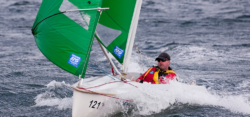
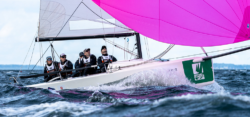
Inclusive sailing: "On the water, we are all equal."
Interview with Silke Basedow from ‘Wir sind Wir! Inclusion in Sailing e.V.’
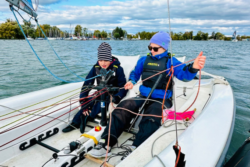
Silke Basedow is an outstanding sailor and committed advocate of inclusive sailing. Born in Hamburg, she is a two-time Inclusion World Champion (2022/2023), European Champion and multiple German Champion in various sailing classes, and has had an impressive career in competitive sport. Today, she sails for leisure and passes on her passion and knowledge as a coach, especially in the area of inclusion. As a founding member and board member of the association "Wir sind wir" (We are us) and responsible for the sports department, she actively promotes greater participation and diversity in sailing. In this interview, she gives us insights into her work and explains how inclusive sailing enriches not only the sport but also society.
Dear Silke, what motivated you personally to promote inclusion in water sports?
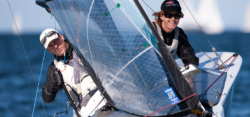
Silke Basedow: I joined the Bundesliga inclusion project as a trainer. At first, I was very nervous about saying the wrong thing – but that quickly subsided.
Inclusive sailing shows me that many barriers only exist in our minds. When I see wheelchair users climbing onto the boat, blind people adjusting the sails and moving around on board – and you would never notice from the outside that this person cannot see, for example – it becomes clear that we are all equal on the water. The only thing that matters is who can sail best.
What does "inclusion in water sports" mean to you – and what are the most common barriers that people with disabilities encounter, both physically and socially?
Silke Basedow: For me, inclusion in water sports means that we sail together – and disability plays no role in this. We have special boats in which you can sail while seated and don't have to walk around the boat. This means that physical limitations are hardly a disadvantage anymore, and it really only comes down to sailing skills.
Common barriers include the fact that many sailing clubs are not yet barrier-free or accessible. This starts with a lack of disabled toilets and extends to stairs that have to be climbed and narrow entrance doors that wheelchairs cannot fit through.
In the children's area, we find that parents often have great respect for letting their children sail – which is understandable. At the same time, we repeatedly see that sailing gives children with disabilities an incredible amount: a feeling of freedom that they often don't have in everyday life. With the boat and the wind, they can move freely across the water – a completely new experience.
Another hurdle is getting started: there are still too few opportunities available. This is partly because sailing is an expensive sport, and we are heavily dependent on funding and sponsors. We often need coaches who focus on a specific group and rely on many volunteers. However, demand is significantly greater than what we as a club or other providers can currently offer. With flagship projects such as the Sailing Bundesliga, we want to raise awareness in order to enable further opportunities.
Where do you currently see the biggest obstacles for people with disabilities who want to sail or generally enjoy being on the water?
Silke Basedow: The biggest hurdle is, on the one hand, that there are too few offers for the high demand and, on the other hand, that many people with disabilities are not even aware that these opportunities exist. That is why it is important for us to raise awareness and highlight the opportunities that are available.
Do sailors with disabilities have to expect higher costs?
Silke Basedow: Currently, our club provides the boats and trainers and also makes school and sailing courses possible through subsidies and sponsors. Those who join us therefore do not have to expect higher costs – on the contrary: it is often cheaper, as you do not need your own boat and the trainers are provided.
What inclusive offerings already exist – and where do you think urgent action is still needed?
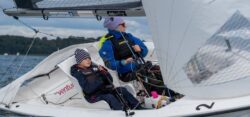
Silke Basedow: We organise beginner courses with schools and other organisations, including regattas and the Bundesliga team. There is also a foundation called Turning Point and several clubs offering inclusive activities. The German Sailing Association (DSV) is also involved in this area.
I believe that action is needed above all to create more regional opportunities to make it easier for people to get started.
Is there a particular story or experience that has touched you personally or motivated you to keep going?
Silke Basedow: At the Inclusion World Championships in Rostock, there was a boy who was bullied because of his disability. He became vice world champion and received an incredible amount of appreciation and applause – it was a very emotional situation.
Another moving experience was a sailing course for women with breast cancer. During the course, they decided to compete in the Helga Cup – the world's largest women's regatta, organised by Wir sind wir. They made it to the starting line, inspired others and pushed their own boundaries. For them, sailing was like a holiday from their illness: on the water, you are so busy that there is no room for stressful thoughts.
How can clubs, organisers and events such as boot Düsseldorf actively promote inclusion in water sports – even with limited resources?
Silke Basedow: Just get started – even on a small scale. Network with organisations that already have services in place, benefit from existing knowledge, break down barriers, enter into partnerships and, if possible, provide financial support.
What are your hopes for the future?
Silke Basedow: That disabilities in sailing will eventually be seen as completely normal – and that we can get everyone who wants to onto the water.